How to Choose LED Wall Systems for Global Sourcing?

Time:2026-10-24 Author:Amelia
0%

Choosing Led Wall Systems for global sourcing involves more than comparing prices and pixel pitches. Buyers must connect visual performance with transport, installation, maintenance, and long-term support. A bright showroom display may look impressive, yet it can behave differently in a warm exhibition hall or outdoor venue. Small details matter. Check cabinet seams, module alignment, cable access, and receiving damage.

This guide explains how experienced sourcing teams evaluate suppliers, samples, and production controls. It considers pixel pitch, brightness, refresh rate, viewing distance, energy use, and control-system compatibility. It also examines factory audits, product testing, packaging strength, warranty terms, spare-part availability, and technical training. Reliable suppliers should provide clear specifications, traceable quality records, and practical installation documents. Certifications should match the destination market and the intended application.

Do not trust the lowest quotation alone.

A sample is not the full shipment. Production batches can vary, and shipping schedules can change. Buyers should request a pre-shipment inspection, test several cabinets together, and confirm performance after extended operation. A written acceptance checklist reduces arguments later. Still, no checklist removes every risk. This is where careful communication and realistic contingency planning become valuable. Regional service partners may cost more, but delayed repairs can cost far more during a live event. The right Led Wall Systems decision balances image quality, supplier credibility, logistics reliability, and ownership cost. It also leaves room to question assumptions before signing a purchase order.
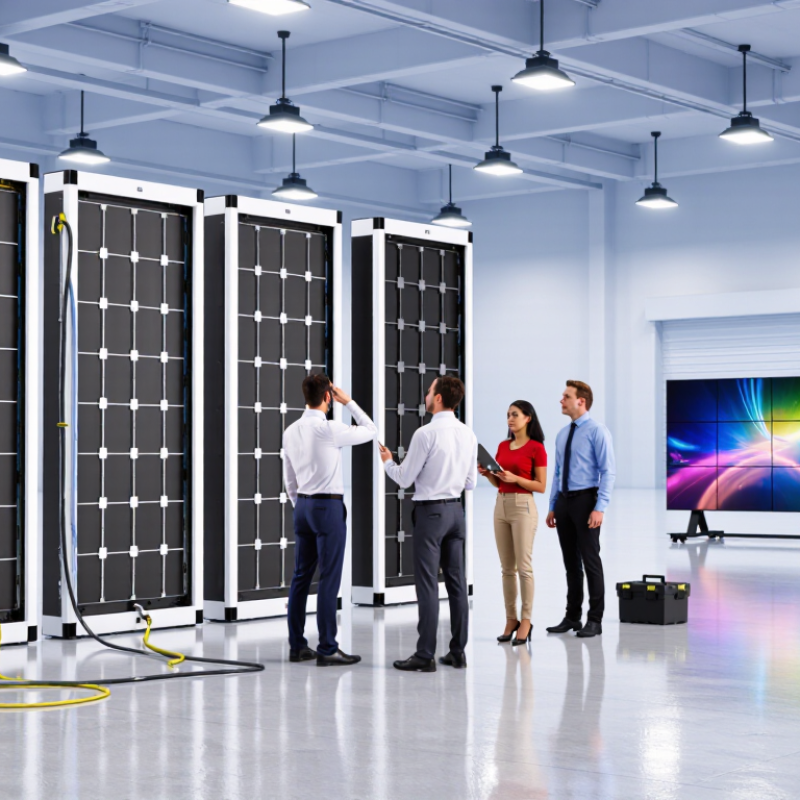
How to Choose LED Wall Systems for Global Sourcing?

LED Wall Systems: Definition, Types, and Core Applications

An LED wall system is a modular display built from connected LED panels, control hardware, power units, and structural supports. Each panel contains small light-emitting diodes that combine to create images, text, or video. Pixel pitch measures the distance between pixels. Smaller pitch usually supports closer viewing.

Common types include indoor fine-pitch walls, outdoor high-brightness walls, rental panels, and fixed-installation systems. Indoor models often prioritize quiet operation and smooth image detail. Outdoor systems need weather protection, stronger cabinets, and brightness that remains visible in daylight. Rental panels usually favor lighter frames and faster assembly. Fixed systems may offer better long-term stability, but they can require more careful structural planning.

Core applications include retail displays, conference stages, transportation halls, sports venues, broadcast studios, and control rooms. In real projects, viewing distance matters more than impressive specifications. A very fine pixel pitch may add cost without improving the audience’s experience. Global sourcing also requires checking voltage ranges, spare-part access, cabinet dimensions, control compatibility, and regional safety documentation. I have seen projects fail because a display looked excellent, yet replacement modules arrived with incompatible connectors. That detail is easy to miss.

Tips: Request a complete sample specification, not only a price. Test brightness, color consistency, heat management, and panel alignment. Ask for installation drawings and maintenance procedures. Leave room for honest uncertainty; supplier claims still need independent verification.

Key Specifications for Comparing LED Wall Systems

How to Choose LED Wall Systems for Global Sourcing?

Global sourcing begins with measurable specifications, not attractive product images. LED wall systems should be compared through pixel pitch, brightness, resolution, and viewing distance. Indoor installations often need moderate brightness, while outdoor displays may require over 5,000 nits. Higher brightness is not always better. It can increase power use and create uncomfortable glare.

Check refresh rate, grayscale performance, and color uniformity during real content playback. A high refresh rate helps cameras capture cleaner images without visible scanning lines. Pixel protection and an IP rating matter in dusty or wet environments. Cabinet size, weight, locking structure, and front or rear maintenance affect installation time. A lightweight cabinet may simplify labor, but sometimes sacrifices durability.

Power specifications deserve careful attention. Confirm voltage range, maximum consumption, average consumption, and connector standards for each destination market. Ask for test reports, electrical certifications, factory quality records, and a clear warranty process. Spare modules, receiving cards, power supplies, and calibration tools should be available for long-term maintenance. Shipping conditions also matter; vibration can damage poorly protected panels.

Do not compare only the quoted price. Request a sample cabinet and test it for several days. Measure brightness, temperature, noise, and power draw. This exposes weaknesses early. Some specifications may look impressive but lack independent verification. That is a concern. Procurement teams should record every assumption, because installation costs, replacement speed, and local technical support can change the real total cost.

How to Assess Suppliers and Manufacturing Capabilities

Choosing an LED wall supplier requires more than comparing catalog prices. Manufacturing capability matters because display quality depends on small production details. Inspect factory records, testing procedures, and component traceability before signing an agreement.

Ask how suppliers control pixel consistency, brightness uniformity, heat management, and cabinet alignment. Request recent production samples, not only showroom units. A reliable manufacturer should explain its aging tests, environmental testing, repair process, and spare-part planning. Check whether engineers can adjust designs for different venues, climates, and installation methods. Factory experience shows in the details. Loose connectors and uneven seams often reveal weak quality control.

Tips: Visit the production site when possible. Watch one module move through assembly and testing. Ask for inspection reports, acceptance criteria, and sample test videos. Verify capacity during busy seasons, because stated output may exceed real production. Speak with technical staff, not only sales representatives. Clarify lead times, packaging protection, training, and after-sales response in writing. An independent inspection can expose problems early.

Do not trust polished presentations alone. I have found that clear documentation is valuable, but it can still miss practical installation issues. Ask suppliers to explain a previous failure and its corrective action. Their answer may reveal more than a perfect sample. Assess communication speed, engineering honesty, and willingness to admit limitations. A supplier that says “we need to verify” may be safer than one promising everything.

Global Sourcing Factors: Compliance, Logistics, and Costs

Choosing LED wall systems for global sourcing requires more than comparing pixel pitch and quoted prices. Compliance should be checked before issuing a purchase order. Ask for current electrical safety, electromagnetic compatibility, and restricted-substance documentation for the target market. Confirm voltage, plug, fire-rating, and recycling requirements with local specialists. Certificates copied from another model are not enough. That detail matters.

In my sourcing work, missing test reports have delayed customs clearance and site approval. Requirements also change. Recheck them. Logistics deserves the same attention. Compare shipping dimensions, pallet protection, spare-module packaging, and realistic production schedules. A compact cabinet may reduce freight costs, but fragile connectors can increase damage risks. Clarify Incoterms, insurance responsibilities, import duties, and local delivery arrangements in writing. Request photos of packed cargo before dispatch.

Cost analysis should include installation, control equipment, power consumption, maintenance, replacement modules, and technician travel. A low quotation can become expensive after currency changes or urgent air freight. I once underestimated storage fees because the installation date moved. That mistake was avoidable. Build a landed-cost sheet for each destination, including taxes and contingency allowances. Ask suppliers how they test brightness consistency, thermal performance, and module interchangeability. Practical evidence is more useful than attractive promises. Still, no checklist removes every risk. A pilot order can reveal weaknesses before a large commitment.

How to Choose LED Wall Systems for Global Sourcing? - Global Sourcing Factors: Compliance, Logistics, and Costs
Global Sourcing Factor Useful Benchmark or Data Point What to Verify Before Purchase Impact on LED Wall Selection
Product Safety Compliance IEC 62368-1 is widely used for audio, video, information and communication technology equipment. Request a valid test report for the exact product configuration, including power supplies, receiving cards, cabinets and control equipment. A report for a similar model may not cover the final configuration. Confirm that the tested input voltage, enclosure design and power components match the delivered system.
Electromagnetic Compatibility The EU EMC Directive 2014/30/EU covers equipment that may generate or be affected by electromagnetic disturbance. Check conducted-emission, radiated-emission and immunity test results. Confirm whether the system uses shielded data cables and compliant power supplies. Poor EMC performance can cause interference, failed site acceptance tests or additional costs for filtering, grounding and cable replacement.
Restricted Substances EU RoHS Directive 2011/65/EU, as amended, restricts substances such as lead, mercury, cadmium and certain flame retardants in electrical and electronic equipment. Obtain a material declaration or RoHS test evidence for LED modules, cables, soldered assemblies, power supplies and structural parts. Material documentation supports customs, distributor and end-customer requirements and reduces the risk of rework or shipment delays.
Ingress Protection IP ratings are defined by IEC 60529. The first digit relates to solids; the second digit relates to water protection. Match the required IP rating to the installation environment. Verify whether the rating applies to the complete assembled cabinet or only to selected components. Outdoor or semi-outdoor projects may require weather protection, drainage, corrosion control and suitable cable glands in addition to the cabinet IP rating.
Customs Classification LED display products are commonly classified within HS Chapter 85, but the final tariff code depends on product function, configuration and destination-country rules. Obtain a written classification decision from a licensed customs broker or the relevant customs authority before shipment. Incorrect classification can change duty, tax, import documentation and inspection requirements. Do not rely only on a supplier-provided HS code.
Manufacturing Lead Time A practical planning range for standard LED cabinet configurations is often 3–8 weeks after technical approval; custom tooling or unusual specifications may take longer. Confirm component availability, production slots, sample approval, burn-in duration, packing date and the definition of “ready to ship.” The lowest unit price may not be the lowest project cost if late production affects installation labor, venue access or liquidated-damage exposure.
International Freight Air freight is generally faster but more expensive; ocean freight usually has lower transport cost but longer transit and port handling exposure. Compare total door-to-door cost, dimensional weight, pallet or flight-case dimensions, port fees, customs clearance, insurance and delivery terms such as FOB, CIF, DAP or DDP. LED cabinets, spare parts and flight cases can create significant volume. Freight should be evaluated using packed dimensions, not only net product weight.
Total Landed Cost Landed cost should include product price, tooling, packaging, freight, insurance, duties, import taxes, broker fees, local transport, installation and commissioning. Build a cost model using the same Incoterm, currency, tax treatment, delivery location and warranty assumptions for every quotation. A lower factory price can be offset by higher logistics, compliance, spare-parts, rework or local-service costs. Compare cost per square metre and cost per operating year.
Power Consumption LED wall specifications normally distinguish maximum power from average or typical power. Actual consumption varies with brightness, image content and refresh settings. Request measured maximum and typical power per square metre, input voltage, current requirements, circuit quantity and recommended distribution-board capacity. Power data affects electrical design, generator sizing, venue approval, operating cost and thermal management. Use measured data rather than marketing estimates.
Quality Control and Burn-In A documented inspection process should cover incoming components, assembly, pixel defects, brightness uniformity, color consistency, signal stability and thermal performance. Define acceptance criteria before production, require serial-number traceability and request inspection records for the shipped batch. Pre-shipment testing reduces the likelihood of mixed batches, dead pixels, cabinet alignment problems and installation-time troubleshooting.
Warranty and Spare Parts A commercially useful warranty should state duration, covered parts, response time, freight responsibility and exclusions in writing. Confirm availability of LED modules, power supplies, receiving cards, data cables, masks, locks and calibration files. Specify recommended spare percentages by component type. Local spare inventory can reduce downtime and emergency freight costs, especially for rental, broadcast, retail and high-traffic installations.
Payment and Supplier Risk Payment risk increases when a large balance is paid before independent inspection, product approval or shipment documentation. Use milestone payments linked to design approval, production completion, inspection acceptance and shipping documents. Verify legal entity, bank details and export history. Structured payment terms protect working capital and create clear remedies when specifications, quantity, delivery date or documentation are not met.
Planning note: The lead-time, freight and cost figures above are indicative procurement benchmarks rather than guaranteed quotations. Confirm current tariffs, standards, transport schedules, taxes and project-specific requirements for the destination market before placing an order.

Installation, Maintenance, and Long-Term Performance Evaluation

How to Choose LED Wall Systems for Global Sourcing?

Installation quality often determines whether an LED wall performs as promised. Request cabinet drawings, power-load data, and service clearances before purchase. A 600 mm module may fit the design but leave no room for rear access. Confirm local voltage, grounding, fire-safety requirements, and structural loading. IEC 62368-1 can guide equipment safety, while IEC 60529 ratings help verify dust and moisture protection. Do not accept “weatherproof” as a complete specification.

Maintenance should be measured, not assumed. Ask for pixel-failure limits, spare-module ratios, calibration procedures, and remote diagnostic records. Front-service modules can reduce labor when the wall sits against a fixed surface. Rear access is still valuable for power supplies and control equipment. The U.S. Department of Energy reports that LED products can use at least 75% less energy and last up to 25 times longer than incandescent lighting. However, an LED wall includes processors, drivers, fans, and power supplies. Their failure patterns differ.

Long-term evaluation needs real operating evidence. Compare brightness stability, color drift, thermal readings, and power consumption after extended use. Request a burn-in test, not only a factory photograph. Track performance quarterly. Imperfect records often reveal more than polished claims. The DOE’s Solid-State Lighting reports repeatedly identify thermal management as critical to LED lifetime and efficiency. Keep ambient temperature below the supplier’s limit, clean ventilation paths, and review replacement lead times across regions. A low purchase price may become expensive when one unavailable module stops an entire section.

FAQS

Why should supplier evaluation go beyond catalog prices?

Manufacturing details strongly affect display quality and reliability. Inspect factory records, testing procedures, and component traceability. A cheaper wall may create higher maintenance costs later.

What factory evidence should buyers request?

Request recent production samples, inspection reports, and sample test videos. Ask to watch one module move through assembly and testing. Showroom units are not enough.

Which production details reveal weak quality control?

Check pixel consistency, brightness uniformity, cabinet alignment, and heat management. Loose connectors and uneven seams are warning signs. Small defects matter.

How can buyers verify real production capacity?

Visit the production site when possible. Check capacity during busy seasons, not only normal periods. Stated output may exceed actual production. Ask technical staff directly.

What installation information should be confirmed before purchase?

Request cabinet drawings, power-load data, and service-clearance requirements. A 600 mm module may fit, but rear access could remain impossible. Confirm voltage, grounding, fire safety, and structural loading.

How should maintenance planning be evaluated?

Ask about pixel-failure limits, spare-module ratios, and calibration procedures. Front service helps when the wall sits against a fixed surface. Rear access still helps with power supplies and control equipment. Plan replacements carefully.

What evidence shows long-term performance?

Request burn-in results instead of factory photographs alone. Compare brightness stability, color drift, thermal readings, and energy use. Track performance quarterly. Measure it.

How can communication quality reveal supplier reliability?

Ask about previous failures and corrective actions. An honest explanation may reveal more than a perfect sample. Clear documents help, but they can miss installation problems. I may underestimate hidden site risks.

Conclusion

Choosing Led Wall Systems for global sourcing requires a balanced evaluation of technology, application, supplier capability, and long-term value. LED wall systems are modular display solutions used for events, control rooms, retail spaces, corporate environments, entertainment venues, and outdoor communication. Buyers should compare pixel pitch, brightness, contrast, refresh rate, viewing angle, color consistency, cabinet design, power efficiency, weather resistance, and control compatibility according to the intended environment.

A reliable sourcing process also involves assessing a supplier’s manufacturing capacity, quality-control procedures, customization options, testing standards, production lead time, and after-sales support. Compliance documentation, safe packaging, shipping arrangements, import requirements, warranty terms, and total landed cost should be reviewed before placing an order. Finally, buyers should consider installation methods, spare parts availability, maintenance access, technical training, software support, and expected service life. A well-planned comparison can help organizations select a dependable LED display solution that performs consistently while controlling operational and replacement costs.


Amelia

Amelia

Amelia is a seasoned marketing professional with a wealth of expertise in our company’s core offerings. With an unwavering passion for driving growth and innovation, she plays a pivotal role in shaping our marketing strategies and enhancing brand visibility. A key aspect of her responsibilities......