Top Curved LED Display Wall Manufacturers Worldwide

Time:2026-09-11 Author:Liam
0%

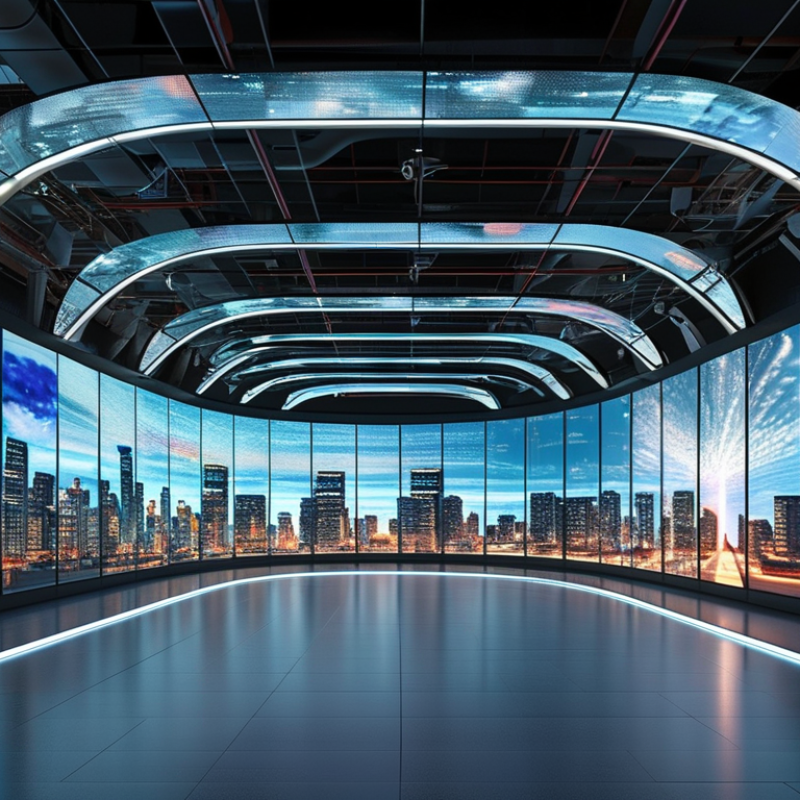
Curved LED Display Wall systems are reshaping visual communication in retail, entertainment, transportation, and luxury architecture. Their seamless modules can follow columns, wrap stages, or create immersive tunnel-like scenes. The market is expanding, but purchasing decisions remain surprisingly practical.

MarketsandMarkets estimates that the global LED display market could grow from approximately USD 7.5 billion in 2023 to USD 11.1 billion by 2028. Grand View Research also identifies strong growth through 2030, driven by digital signage, large venues, and higher demand for fine-pixel-pitch displays. These figures support the opportunity. They do not guarantee performance. Viewing distance, cabinet flexibility, brightness, refresh rate, service access, and thermal management still determine real-world value. A beautiful curve can become an expensive mistake when installers ignore those details.

As LED display consultant Chris Rudd explains, “Curvature is valuable only when it improves the viewer’s experience.” That principle should guide any manufacturer comparison. The leading suppliers are not simply selling unusual shapes. They are engineering stable cabinets, consistent color, reliable control systems, and safer installation processes. This guide examines Top Curved LED Display Wall Manufacturers Worldwide through those measurable qualities. It considers product engineering, customization, installation experience, after-sales support, and documented market credibility. Some rankings may remain debatable. That is intentional. Manufacturer strength depends on the project, not marketing language alone.
Top Curved LED Display Wall Manufacturers Worldwide

What Is a Curved LED Display Wall?

Top Curved LED Display Wall Manufacturers Worldwide

What Is a Curved LED Display Wall?

A curved LED display wall uses flexible or angled LED modules to create a non-flat visual surface. Its gentle arc can wrap around columns, stages, retail corners, or immersive rooms. Unlike a standard flat wall, it changes how viewers perceive depth and motion.

The display is built from LED cabinets, receiving cards, power supplies, and control processors. Pixel pitch matters. A 2.5 mm pitch usually suits closer indoor viewing, while larger pitches work better from a distance. Grand View Research estimated the global LED display market at about USD 7.1 billion in 2023, with an expected 8.5% compound annual growth rate through 2030. This growth reflects rising demand for large-format visual communication, though market estimates vary by product definition.

The curve is not automatically better. I have seen installations where an aggressive radius caused visible seams and uncomfortable viewing angles. A smooth radius, accurate cabinet alignment, and stable brightness are more important than dramatic shape. Check refresh rate, grayscale performance, service access, and thermal behavior. IEC 62368-1 compliance should also be verified through reliable documentation.

Tips: Measure the audience’s nearest viewing distance before choosing pixel pitch. Request a physical module sample. Inspect the wall from several angles. Do not judge quality from front-facing photos alone. A small calibration error can become obvious across a wide curved surface.

Key Technologies Used in Curved LED Display Walls

Curved LED display walls depend on more than cabinet shape. Their visual quality comes from coordinated optical, electronic, and structural technologies. Flexible printed circuit boards help modules follow tighter curves without visible gaps. SMD and COB packaging improve pixel protection and surface uniformity. For close viewing, fine pixel pitches below 2.5 millimeters are increasingly important.

Pixels matter most.

The 2024 MarketsandMarkets LED Display Market report estimates the sector will grow from about USD 7.4 billion in 2024 to USD 10.8 billion by 2029. This growth supports stronger demand for high-refresh-rate systems, precise grayscale control, and HDR processing. A refresh rate above 3,840 hertz can reduce camera scan lines in studios and event venues. Internal receiving cards also correct brightness differences between cabinet sections. However, published specifications do not always reflect real viewing conditions.

Curved walls require accurate mechanical alignment. Locking systems must control cabinet angles while preserving service access. Front-maintenance modules are useful when displays sit against architectural surfaces. Thermal design is equally practical. Aluminum frames, airflow channels, and temperature sensors help protect LEDs during long operating hours. Grand View Research reports continued growth in direct-view LED applications, especially across advertising, retail, and large venues. Still, a higher resolution is not automatically better. Excessive brightness can cause glare, while overly tight curves may distort images. Testing the finished wall from actual audience positions remains essential.

Top Curved LED Display Wall Manufacturers Worldwide - Key Technologies Used in Curved LED Display Walls

Typical pixel-pitch and recommended viewing-distance ranges used when designing curved LED display walls.

Fine-pitch SMD and COB technologies are commonly selected for close viewing, while larger pixel pitches are used for longer viewing distances. Actual specifications vary according to cabinet size, curvature, brightness, refresh rate, and installation environment.

How Leading Global Manufacturers Are Evaluated

Top Curved LED Display Wall Manufacturers Worldwide

Leading manufacturers are evaluated through more than bright showroom images. Reviewers examine factory quality controls, engineering records, and completed installations. A reliable supplier should explain pixel pitch, viewing distance, curve radius, and cabinet tolerances clearly. Vague specifications deserve careful questions.

Real-world performance matters. Technical teams inspect module alignment, color calibration, heat management, and front or rear maintenance access. On a curved wall, small assembly errors can create visible waves across the image. Strong manufacturers provide testing reports, spare-parts plans, and documented installation guidance. They also train local technicians instead of leaving every problem to remote support.

A polished demo can mislead. Site conditions change everything. Evaluators should request footage from bright rooms, dark venues, and long operating periods. Power stability, refresh rate, brightness control, and image processing need practical verification. Warranty language also matters, especially response times and replacement procedures. Some suppliers offer impressive engineering but weak after-sales coordination. That gap is easy to miss during procurement. Independent references, transparent production visits, and consistent answers often reveal more than marketing claims. The best assessment remains balanced: measure performance, question assumptions, and record what the manufacturer cannot yet prove.

Notable Curved LED Display Wall Manufacturers by Region

Curved LED display wall manufacturers differ sharply by region, application, and engineering culture. East Asia remains the main production center, supported by dense component supply chains and large-scale assembly. Regional factories commonly offer fine-pitch panels, flexible cabinets, and rapid customization for retail atriums, broadcast studios, and concert stages.

Mordor Intelligence identifies Asia-Pacific as the largest LED display market, while Grand View Research valued the global market at approximately USD 7.1 billion in 2023. Its forecast suggests an 8.7% compound annual growth rate from 2024 to 2030. These figures explain the region’s strong manufacturing depth. However, production volume is not proof of reliability. That distinction matters.

European manufacturers often emphasize optical consistency, structural engineering, and documentation for permanent installations. North American suppliers typically compete through project design, integration, content support, and local maintenance networks. Middle Eastern manufacturers and solution providers increasingly address high heat, dust, and large outdoor venues. Those conditions demand stronger thermal planning and protective cabinet design.

Buyers should inspect radius tolerance, refresh stability, brightness control, spare-part availability, and installation records. Ask for measured data, not attractive renderings. Curvature can expose weak seams quickly. A display may look smooth from ten meters but reveal visible gaps at close range. Regional strengths are useful, yet quality still depends on testing, field experience, and accountable after-sales support.

Top Curved LED Display Wall Manufacturers Worldwide - Notable Curved LED Display Wall Manufacturers by Region
Region Regional Manufacturing Profile Common Curved Display Formats Typical Pixel-Pitch Range Common Curvature Solutions Typical Application Segments Common Environmental and Safety Features Key Compliance Requirements to Verify
East Asia Large concentration of LED display component production, cabinet fabrication, OEM manufacturing, and export-oriented assembly. Concave walls Convex walls 360° columns Flexible ribbon displays Indoor: approximately 1.5–4 mm
Outdoor: approximately 3.9–10 mm
Flexible LED modules, curved cabinet joints, segmented cabinets, and custom cylindrical structures. Retail, broadcast studios, corporate lobbies, museums, control rooms, stadiums, and large-format advertising. Front-service modules, die-cast aluminum cabinets, high refresh rates, redundant power options, and outdoor IP-rated enclosures. Confirm EMC testing, electrical safety certification, photobiological safety, ingress protection, fire performance, and destination-market requirements.
Southeast Asia Growing regional assembly, system integration, project customization, and distribution activity for commercial and event-display installations. Rental curves Retail arcs Stage backdrops Lightweight walls Indoor: approximately 2.5–4 mm
Outdoor: approximately 3.9–10 mm
Locking rental cabinets, adjustable angle connectors, flexible modules, and modular curved frames. Live events, shopping centers, hospitality venues, houses of worship, exhibitions, and transportation facilities. Lightweight cabinets, quick-release mechanisms, weather-resistant housings, high-brightness LEDs, and service-access designs. Verify electrical safety, EMC, local installation codes, structural loading, fire-safety documentation, and outdoor IP testing where applicable.
Europe Strong emphasis on engineering, architectural integration, custom fabrication, system design, and project-specific compliance. Architectural ribbons Concave theaters Curved retail façades Fine-pitch interiors Indoor: approximately 1.2–4 mm
Outdoor: approximately 3.9–8 mm
Precision-fabricated cabinets, radius-specific frames, flexible modules, and mechanically adjusted cabinet systems. Theaters, museums, premium retail, meeting spaces, broadcast environments, transport hubs, and cultural venues. Low-noise operation, thermal management, front maintenance, color calibration, energy monitoring, and architectural finishing. CE marking, applicable EN safety standards, EMC requirements, RoHS substance restrictions, REACH obligations, and local building regulations.
North America Established display integration and custom-installation market with emphasis on engineering, service support, rental systems, and project delivery. Broadcast curves Sports venues Immersive rooms Custom media façades Indoor: approximately 1.5–4 mm
Outdoor: approximately 3.9–10 mm
Flexible modules, angle-adjustable cabinets, custom steel or aluminum substructures, and rental-frame systems. Sports and entertainment, casinos, corporate campuses, retail, broadcast, education, and experiential installations. High refresh rates, serviceability, redundant systems, structural engineering, brightness control, and content-management compatibility. Verify applicable UL or ETL certification, FCC emissions requirements, electrical codes, fire ratings, seismic considerations, and local permits.
Middle East Project-driven market supported by regional integrators, imported display manufacturing capacity, and custom architectural fabrication. Large outdoor curves Hotel interiors Mall atriums Iconic structures Indoor: approximately 2.5–4 mm
Outdoor: approximately 3.9–10 mm
Segmented cabinets, custom-radius steel frames, flexible modules, and reinforced outdoor cabinet structures. Shopping malls, stadiums, destination venues, hospitality, public landmarks, airports, and outdoor advertising. High-brightness operation, dust protection, thermal management, UV-resistant components, weatherproof cabinets, and remote monitoring. Verify regional electrical standards, EMC, outdoor IP rating, fire safety, wind-load calculations, thermal testing, and project-specific authority approvals.
Latin America Market activity is commonly driven by distributors, local integrators, event specialists, and project-based installation companies. Event rental walls Retail curves Sports displays Outdoor signage Indoor: approximately 2.5–4 mm
Outdoor: approximately 4–10 mm
Rental cabinets, flexible LED modules, modular radius frames, and locally fabricated support structures. Concerts, retail, sports, hospitality, shopping centers, public advertising, and corporate events. Quick installation, front and rear service options, voltage protection, outdoor sealing, brightness scheduling, and spare-module availability. Confirm country-specific electrical certification, EMC rules, fire requirements, structural loading, import documentation, and outdoor ingress testing.
Africa Developing project and integration market with demand centered on advertising, events, hospitality, retail, and public-sector installations. Outdoor advertising curves Event backdrops Mall installations Feature columns Indoor: approximately 3–6 mm
Outdoor: approximately 4–10 mm
Modular cabinets, flexible modules, custom support frames, and simplified radius-adjustable structures. Outdoor advertising, churches, stadiums, hospitality, retail, concerts, transport facilities, and civic projects. High brightness, dust and moisture protection, surge protection, remote diagnostics, robust power supplies, and accessible maintenance design. Verify national electrical requirements, EMC, structural and wind-load calculations, outdoor IP rating, fire safety, and installation permits.
Oceania Engineering-led market with strong focus on system integration, commercial installation, rental production, and outdoor durability. Sports venues Retail interiors Broadcast walls Outdoor landmarks Indoor: approximately 1.5–4 mm
Outdoor: approximately 3.9–10 mm
Flexible modules, precision curved cabinets, rental systems, and engineered subframes for permanent installations. Stadiums, shopping centers, entertainment venues, corporate offices, broadcast facilities, and public spaces. Sunlight-readable brightness, corrosion resistance, front maintenance, thermal control, high refresh rates, and structural certification. Verify applicable electrical safety standards, EMC, local construction regulations, wind loading, fire performance, and outdoor IP testing.
Note: Pixel-pitch ranges and feature descriptions represent commonly specified industry configurations by region rather than a ranking of individual companies. Actual specifications vary according to project size, viewing distance, installation environment, cabinet design, and destination-market regulations.

How to Choose the Right Curved LED Display Wall Manufacturer

Choosing a curved LED display wall manufacturer requires more than comparing pixel pitch and price. Grand View Research valued the global digital signage market at USD 31.63 billion in 2023, with projected growth through 2030. This expansion increases supplier choices, but not necessarily quality. Ask for factory test records, cabinet tolerances, LED batch information, and measured brightness data. A reliable manufacturer should explain these details clearly.

Start with the viewing distance and content type. Fine-pitch modules suit close indoor audiences, while larger pitches can reduce cost in arenas or retail halls. Request a powered sample, not only computer renderings. Check color consistency, cabinet gaps, black-level performance, and curve alignment under real lighting. The manufacturer should also provide refresh-rate measurements, thermal tests, spare-part ratios, and a written replacement process. Standards such as CE, EMC, and RoHS can support compliance, but certificates should be verifiable.

Maintenance often separates a successful installation from an expensive one. Ask whether modules are front-serviceable, how calibration is completed, and where technicians are located. A two-year warranty sounds useful, yet response time matters more during an event. Review at least three comparable installations and speak with their operators. Some manufacturers quote perfect power consumption figures. Actual usage may vary with brightness and content. I would question optimistic claims. Require documented testing, realistic energy estimates, and clear limits on warranty coverage before signing.

FAQS

: What is a curved LED display wall?

: It uses flexible or angled LED modules to form a non-flat visual surface. The curve can surround stages, columns, retail corners, or immersive rooms.

Is a curved LED wall always better than a flat wall?

No. A dramatic curve may create visible seams or uncomfortable viewing angles. A smooth radius usually matters more.

How should I choose the pixel pitch?

Measure the audience’s nearest viewing distance first. A 2.5-millimeter pitch often suits closer indoor viewing. Larger pitches may work better across spacious venues.

Which technologies improve image quality?

Flexible circuit boards help modules follow curved surfaces. SMD or COB packaging can improve protection and surface uniformity. Fine pitches below 2.5 millimeters support close viewing.

What refresh rate is suitable for cameras?

A refresh rate above 3,840 hertz can reduce camera scan lines. This matters in studios and event venues. Real testing still matters.

How does a curved wall manage heat?

Aluminum frames, airflow channels, and temperature sensors help control heat. Long operating hours can expose weak thermal design. Cooling should not be an afterthought.

What should I inspect before purchasing?

Request a physical module sample. View the display from several audience positions. Check brightness, grayscale, refresh rate, service access, and cabinet alignment.

Is front maintenance useful?

Yes, especially when the wall sits against an architectural surface. Front-access modules can simplify repairs. But maintenance planning is often underestimated.

Conclusion

A Curved Led Display Wall is a flexible, high-impact visual solution designed to create immersive presentations in environments such as exhibitions, retail spaces, entertainment venues, control rooms, and architectural installations. Unlike traditional flat screens, its curved structure supports wider viewing angles, stronger visual continuity, and more dynamic spatial design. Key technologies include fine pixel pitch, high refresh rates, advanced image processing, modular cabinets, seamless splicing, energy-efficient components, and flexible installation systems that support different curves and layouts.

Leading global manufacturers are evaluated by display quality, product reliability, customization capability, technical innovation, installation support, warranty coverage, and long-term service. Notable suppliers can be found across Asia, Europe, North America, and other major technology regions, each offering different strengths in engineering, production capacity, design, and project management. When choosing the right manufacturer, buyers should compare technical specifications, project experience, maintenance requirements, delivery capabilities, certification standards, and total ownership costs to ensure the selected Curved Led Display Wall meets both creative and operational goals.

Liam

Liam

Liam is a dedicated marketing professional with a profound expertise in the industry, where he excels at highlighting the unique advantages of our core products. With a keen understanding of market trends and consumer needs, Liam frequently updates our company’s professional blog, providing......